Tuesday, May 31, 2005

Cheerio from Samuel Pepys

On this day, in the year of our Lord, 1669, citing poor eyesight, Samuel Pepys recorded the last event in his diary. A great loss to the English speaking world's erudition of life in the 17th century, yet without his meticulus writing of the diary in the first place, we would know even less of everyday London life. Just in case you are wondering, he pronounced his name as "Peeps".

Who was Samuel Pepys?

Samuel Pepys was born in London on 23 February 1633, the fifth of eleven children, although by the time he was seven only three of his siblings, all younger, had survived. He was sent to grammar school at Huntingdon during the English Civil War (1642-1651), returning later to London and attending St Paul’s School. Following this he went to Cambridge where he attended Trinity Hall and then Magdalene colleges. Not long after taking his degree in 1654 he was employed as secretary in London by Edward Mountagu, a distant relative who was now a Councillor of State.

In 1655 Pepys married Elizabeth St Michel and at some point after 1656, while still attached to Mountagu’s service, Pepys became clerk to George Downing, a Teller of the Receipt in the Exchequer. However, he and his wife separated for a while (for unknown reasons) and in 1658 he had a bladder stone removed in a dangerous operation. Later the same year Pepys and his wife moved from a single room in Mountagu’s lodgings to Axe Yard near the palace of Westminster, where he was living when starting the diary in 1660.

Pepys was a practical man of business but also had a wide-ranging appetite for knowledge. His classical and mathematical education was the basis from which he explored the arts and sciences and he was an accomplished musician.

London offered him all the diversions he craved for: music and women (to the beauty of both he stood in a ‘strange slavery’), friendships, the casual sociableness of the taverns, above all — what only a great town can give — the constant stimulus of new experience. Pepys was always ‘with child to see any strange thing’ — living and savouring every moment of his life with an intensity which never failed, despite occasional spasms of guilt. There can have been few young men in London with an appetite for pleasure to compare with his in sharpness and range. (Latham and Matthews, as above, p.xix)

Friday 30 May 1662, of Pepys Diary: This morning I made up my accounts, and find myself ‘de claro’ worth about 530l., and no more, so little have I increased it since my last reckoning; but I confess I have laid out much money in clothes. Upon a suddaine motion I took my wife, and Sarah and Will by water, with some victuals with us, as low as Gravesend, intending to have gone into the Hope to the Royal James, to have seen the ship and Mr. Shepley, but meeting Mr. Shepley in a hoy, bringing up my Lord’s things, she and I went on board, and sailed up with them as far as half-way tree, very glad to see Mr. Shepley. Here we saw a little Turk and a negroe, which are intended for pages to the two young ladies. Many birds and other pretty noveltys there was, but I was afeard of being louzy, and so took boat again, and got to London before them, all the way, coming and going, reading in the “Wallflower” with great pleasure. So home, and thence to the Wardrobe, where Mr. Shepley was come with the things. Here I staid talking with my Lady, who is preparing to go to-morrow to Hampton Court. So home, and at ten o’clock at night Mr. Shepley came to sup with me. So we had a dish of mackerell and pease, and so he bid us good night, going to lie on board the hoy, and I to bed.

Pepys' Diary

Friday, May 27, 2005

Attention Know-it-alls!

Here is A Quiz For People Who Know Everything. If that describes you, well, take the test and find out if you really are as erudite as you think. I discovered quite quickly that I DO NOT know everything; but in my defense there are four questions on sports and I am a self-admitted sports dunce! I did get numbers 3, 6, 8, 11 and 12. Honestly, these are not trick questions. These are straight questions with straight answers.
(Received from the Internet, with no attribution.)

1. Name the one sport in which neither the spectators nor the participants know the score or the leader until the contest ends.

2. What famous North American landmark is constantly moving backward?

3. Of all vegetables, only two can live to produce on their own for several growing seasons. All other vegetables must be replanted every year. What are the only two perennial vegetables?

4. Name the only sport in which the ball is always in possession of the team on defense, and the offensive team can score without touching the ball?

5. What fruit has its seeds on the outside?

6. In many liquor stores, you can buy pear brandy, with a real pear inside the bottle. The pear is whole and ripe, and the bottle is genuine; it hasn't been cut in any way. How did the pear get inside the bottle?

7. Only three words in standard English begin with the letters "dw" and they are all common words. Name two of them.

8. There are 14 punctuation marks in English grammar. Can you name at least half of them?

9. Where are the lakes that are referred to in the Los Angeles Lakers?

10. There are 7 ways a baseball player can legally reach first base without getting a hit. Taking a base on balls (a walk) is one way. Name the other 6.

11. Name the only vegetable or fruit that is never sold frozen, canned, processed, cooked, or in any other form except fresh.

12. Name 6 or more things that you can wear on your feet beginning with the letter "s."
HERE are the Answers . Good Luck! Hurry back. Trackedback at Mudville Gazette.
;

DAR Bench Presentation

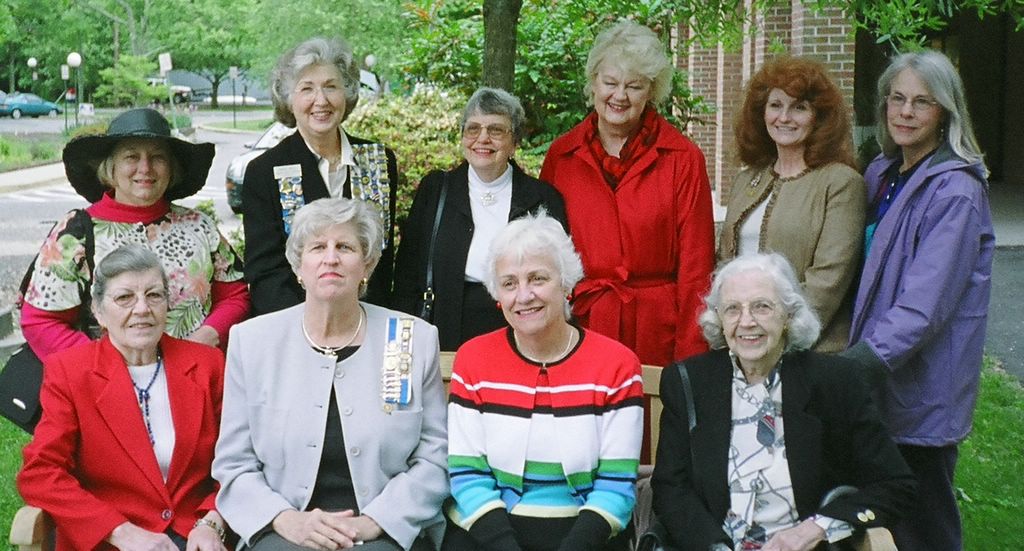
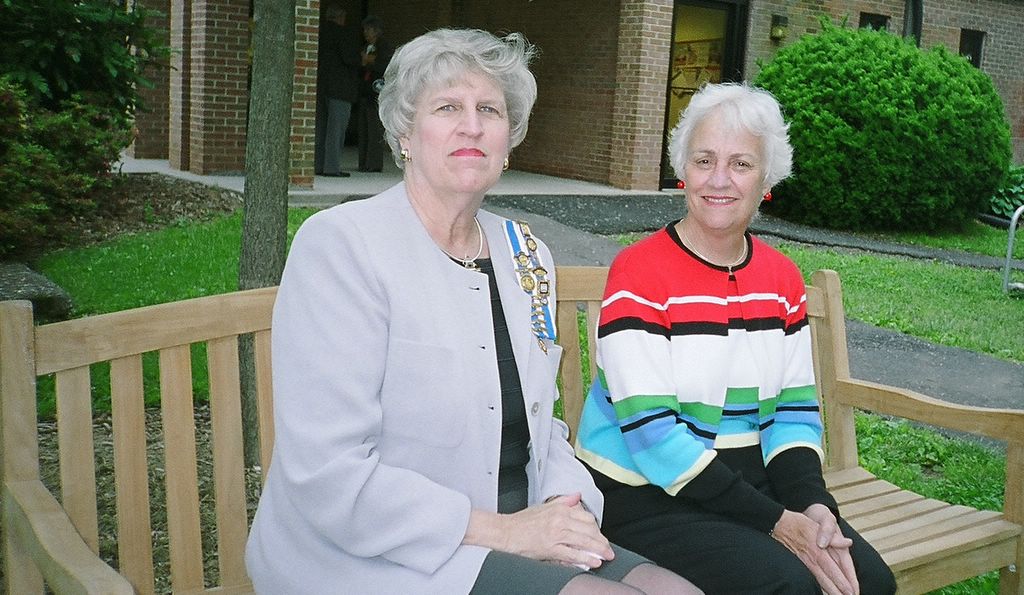
TO THE TOWN OF VIENNA, VIRGINIA - On Wednesday, May 25, 2005, at 12 Noon, at the Vienna Community Center, the FAIRFAX COUNTY CHAPTER of the National Society of the Daughters of the American Revolution (NSDAR), presented a teak bench to the Town of Vienna and to Mayor Jane Seeman. The bench was given to commemorate the 100th Anniversary, 1905–2005, of Fairfax County Chapter NSDAR of Vienna, Virginia.


|| Fairfax County Chapter Daughters of NSDAR at the ceremony, along with the Mayor of Vienna, Virginia ||

|| Fairfax County Chapter NSDAR Regent Martha Cole and Vienna Mayor Jane Seeman, seated at the new teak bench given to commemorate the centennial anniversary of the local DAR chapter, at the Vienna, Virginia Community Center. ||

ANSWERS

Here are the ANSWERS to the Attention Know-it-alls Quiz of 5/27/2005. If you have not taken the quiz, go there first and then come back to see how smart you really are.

1. The one sport in which neither the spectators nor the participants know the score or the leader until the contest ends ... boxing

2. North American landmark constantly moving backward ... Niagara Falls. The rim is worn down about two and a half feet each year because of the millions of gallons of water that rush over it every minute.

3. Only two vegetables that can live to produce on their own for several growing seasons ... asparagus and rhubarb.

4. The only sport in which the ball is always in possession of the team on defense, and the offensive team can score without touching the ball ... baseball.

5. The fruit with its seeds on the outside ... strawberry.

6. How did the pear get inside the brandy bottle? It grew inside the bottle. (The bottles are placed over pear buds when they are small, and are wired in place on the tree. The bottle is left in place for the entire growing season. When the pears are ripe, they are snipped off at the stems.)

7. Three English words beginning with dw ... dwarf,dwell,and dwindle.

8. Fourteen punctuation marks in English grammar ... period, comma, colon, semicolon, dash, hyphen, apostrophe, question mark, exclamation point, quotation marks, brackets, parenthesis, braces, and ellipses.

9. The original lakes referred to in Lakers ... in Minnesota. (The team was originally known as the Minneapolis Lakers, and kept the name when they moved west.)

10. Seven ways a baseball player can legally reach first base without getting a hit....taking a base on balls (a walk) ... batter hit by a pitch, passed ball, catcher interference, catcher drops third strike, fielder's choice, and being designated as a pinch-runner.

11. The only vegetable or fruit never sold frozen, canned, processed, cooked, or in any other form but fresh ... lettuce.

12. Six or more things you can wear on your feet beginning with "s"... shoes, socks, sandals, sneakers, slippers, skis, skates, snowshoes, stockings, stilts.

;

Monday, May 16, 2005

American Daughter Returns

Welcome back to American Daughter. She is reporting today that the American Daughter Media Center is back on line:
"Exactly twenty days ago, we had to leave our previous hosting situation for the Media Center due to excessive bandwidth usage. After much searching, we found a host that will give us ten Gigabytes per day. WE HOPE THAT WILL BE ENOUGH. After great effort, the American Daughter Media Center is up on the new servers."
Welcome back. We missed you.

Saturday, May 14, 2005

Podcasting the Internet

Podcast Alley! Isn't it amazing how this new technology is catching on in the blogosphere? Even more amazing; actually quite stunning it is that Catholic Insider is Number 4 of the "The Top 10 Podcasts for the month of May". I am a fan of Father Roderick, and it seems I am not the only one. It tells quite a bit about the spiritual health of the connected. On the Internet, there is no ACLU lurking about, shouting "Violations of Separation of Church and Internet!" Not yet, anyway. The Judeo-Christian tradition of showing all glory to God continues.

Notes from a Teacher writes:
... stories I’ve been following today point the way to the type of media I want for the future. ... I also want the personal journalism of people such as Father Roderick Vonhögen, a Dutch Catholic priest. I’ve been catching up on his Catholic Insider podcasts and among them was the one he recorded in in the hours following the announcement of the death of Pope John Paul II. Like any good journalist, Father Roderick took me to a specific place — St. Peter’s Square — at a specific time and shared with me what was happening at a momentous moment. He added to it his expertise and his humanity. And he layered it with his own reactions to the death of the pope. It left me with a greater understanding of the event than did the TV reports and newspaper stories.

Eamonn Fitzgerald calls Father Roderick "The Podfather".

... it may be too late for the newspaper business to recapture an audience that's heading for the exits. ... the kind of multimedia news that is becoming the next form of journalism is being assembled before our eyes. And here we come to the point of today's homily. Step forward Father Roderick Vonhögen, Catholic priest of the Archdiocese of Utrecht in The Netherlands. Trading as The Catholic Insider, he's "Podcasting from the heart of the Catholic Church", as he puts it. Talk about brilliant use of the new media to deliver niche news! This guy's simply astonishing. Text, images, audio... he does it, with passion and style. "Let me take you back to the night before the pope's funeral, and let's do a soundseeingtour of the streets around St.Peter's square, crowded with ten thousands of young people who travelled to Rome from all over the world." Love that "soundseeingtour", there. And now he's podcasting around the conclave. ...(T)he Father Rodericks are way ahead of the game. And they're only getting going. Pod on, padre!

Secret Worlds: The Universe Within

"View the Milky Way at 10 million light years from the Earth. Then move through space towards the Earth in successive orders of magnitude until you reach a tall oak tree just outside the buildings of the National High Magnetic Field Laboratory in Tallahassee, Florida. After that, begin to move from the actual size of a leaf into a microscopic world that reveals leaf cell walls, the cell nucleus, chromatin, DNA and finally, into the subatomic universe of electrons and protons."
Molecular Expressions: Science, Optics and You - Secret Worlds: The Universe Within - Interactive Java Tutorial:

Bartholomew Gosnold

At Jamestown, Virginia, America's "cradle of civilization", great preparations are underway for 2007, when they will celebrate the 400th anniversary of the first permanent English settlement in America. In order to extract a piece of DNA for analysis, the Church of England has agreed, for the first time in history, to allow excavation under the floor of a parish church where lay the remains of Bartholomew Gosnold's sister. Who was Bartholomew Gosnold, you ask? Even the director of archaeology for the Association for the Preservation of Virginia Antiquities, William Kelso, had never heard of Gosnold before 2002.
"He is the person without which Jamestown would not have happened. People talk about American history as if it started with Washington and Jefferson. But Gosnold was our founding grandfather. He's a lost part of American history."
If tests prove that the bones are Gosnold's, American history will be rewritten. Bartholomew Gosnold is unknown in both the United States and in Britain because history belongs to those who write it, rather than those who create it. The now famous Jamestown colonist John Smith, returned to England and spent the rest of his life writing about his leadership exploits in the Virginia colony. Overlooking the historic James River, in the center of the Jamestown fort, there now stands John Smith's statue. There is nothing to commemorate Gosnold. The excavation of the gravesite of "an important person" at Jamestown, Virginia may change the written history of America's founding.
U.K. Excavation May Rewrite U.S. History

Washington Post, JAMESTOWN, Va.
Bartholomew Gosnold might have been the founding father of what we now know as the United States, though his name and place in history have been buried in the passage of time and the importance that the swaggering adventurer John Smith attached to himself.

That could change soon. Two years after stumbling across a grave site holding the bones of a middle-aged man of high rank, archaeologists at the Jamestown settlement are about to learn whether the skeletal remains are Gosnold's.

Sunday, May 08, 2005

Happy Mother's Day


Happy Mothers Day

"I HELD a jewel in my fingers
And went to sleep.
The day was warm, and winds were prosy;
I said: ’T'will keep.'

"I woke and chid my honest fingers,—
The gem was gone;
And now an amethyst remembrance
Is all I own."

~~ BY Emily Dickenson

Thursday, May 05, 2005

Kicks on Route 66

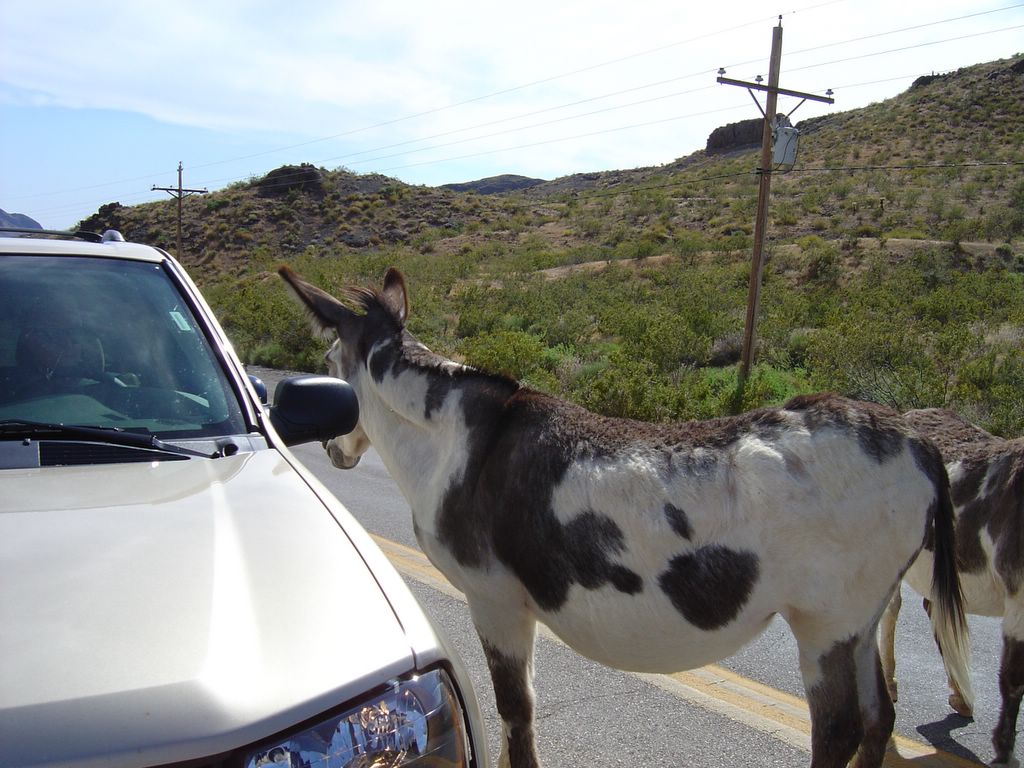
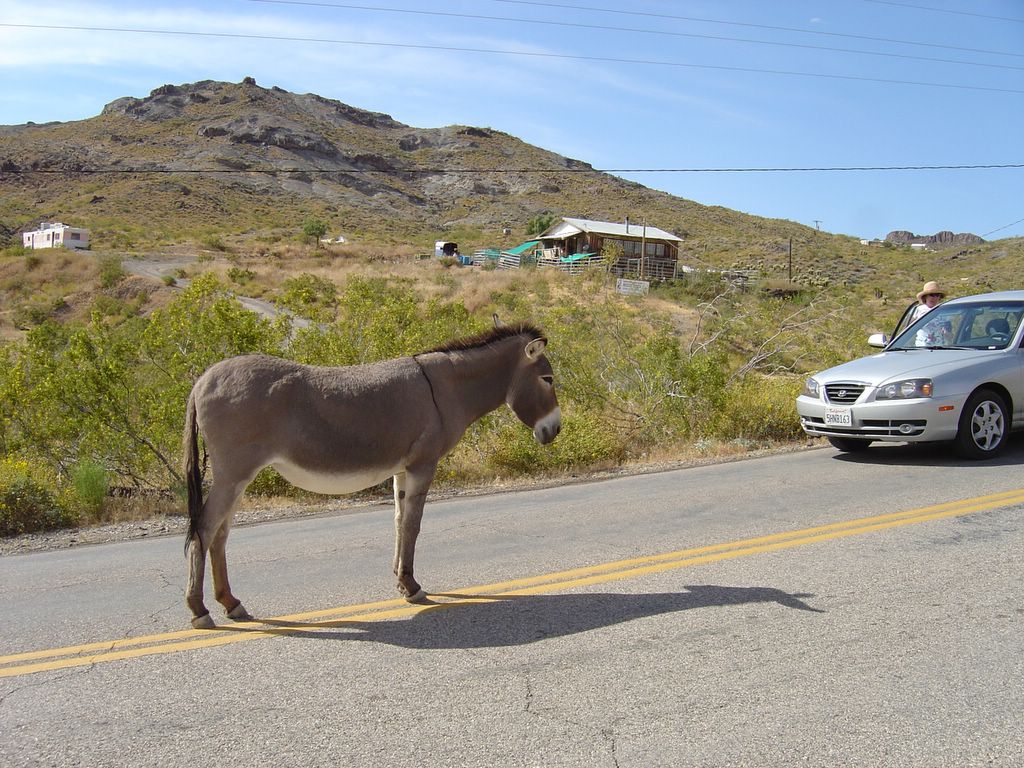
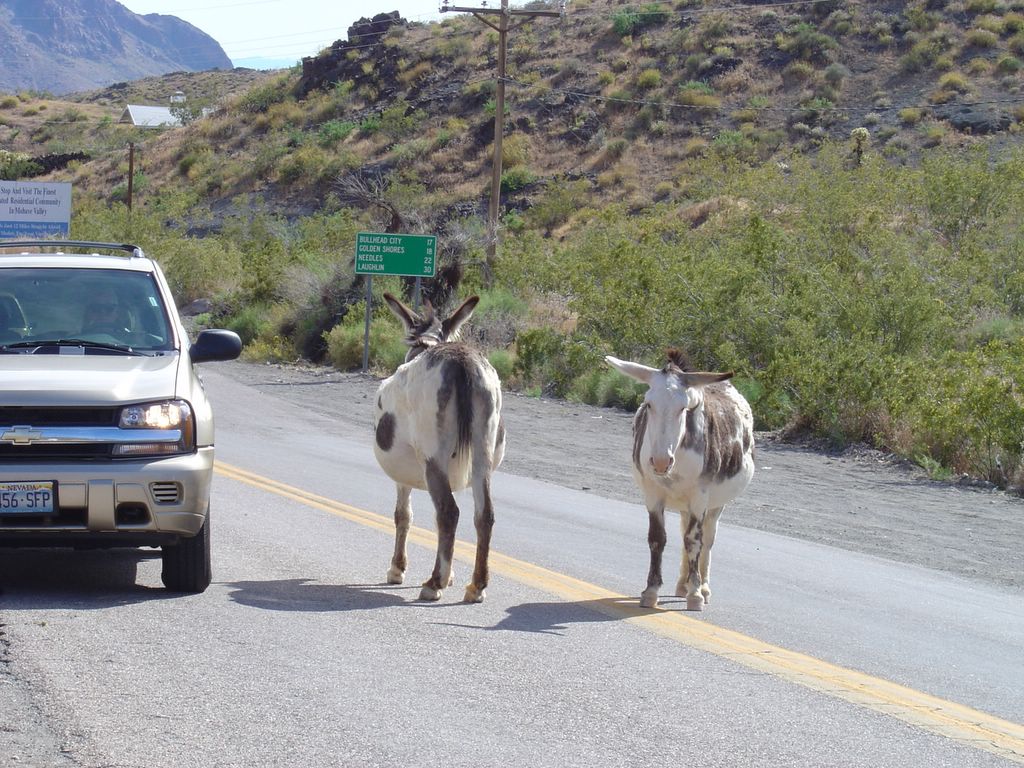
Is this what is meant by "Get your kicks on Route 66"? I was unaware that the wild burros now own the famous Route 66 that traverses the Mohave Desert, at Oatman, Arizona. Here is the proof as my husband attempts to navigate our SUV among them, and I try shooing the beasts from the highway while avoiding their bites and kicks, May 2, 2005. When I returned to our vehicle, one curious burro had his entire head in the car's passenger side, where I wanted to be.

|| The Burros Own Route 66

|| Wild Burros Left Behind by the Gold Miners on Route 66

|| This Guy is the Median Monitor of Route 66

|| Welcome to Oatman, Arizona - Home of the Wild Burros

, , ,

Tuesday, May 03, 2005

Who Are Rednecks?

Rednecks are progeny of the mighty Scots-Irish Presbyterians who pioneered the southern Appalachians and the American West. Few of today's Rednecks understand the true meaning and heritage of the word. This term originated with Lowland Scottish Presbyterians who would wear red scarves or stiff red collars around their necks, demonstrating that they were Covenanters, members of the National Covenant, which was the Scottish Presbyterian Church. They had literally signed their oaths with their own blood at Greyfriar's Kirkyard in 1638. For the wearing of their distinctive insignia, they received the pejorative appellation, Rednecks. For their refusal to accept the Church of England, which they described as "Popery without the Pope," these Scots were persecuted by the British. They fled first to Ulster, Ireland, then to America, where they became the Scots-Irish ethnic group. The word Redneck in early America referred to a descendant of those Scottish Protestants or, more generally, a southern Scots-Irish American. At the time of the American Civil War, the Yankees began referring to all white Southerners as Rednecks. Ironically, the nickname Yankee comes from the Dutch language and is based upon a word implying greed.

Many Americans attempt to slander not only this ethnic group, but the entire white South by using the appellation "Redneck." They are more to be pitied than confronted, and besides the term "Redneck" should be a badge of honor amongst true "Rednecks." It is a benediction from Heaven to be descended from people who were brave rebels and fighters against injustice; who were fearless in settling where others dared not - the Southern Highlands. They were staunch, freedom loving Presbyterians, who were opposed to slavery. Their ties of kinship were as tight as the clans of Scotland. They were extremely independent, industrious and at times, a bit boisterous. It is true they were known to be boastful and seemed to feel that naught but the trees were higher than themselves. They could certainly provoke disorder and loud talk when they disagreed with a thing, part of the reason they had been called “Crackers” in Ireland. They were "Rednecks", and we are too. And, by the way, y'all, we can take it!

THE NATIONAL COVENANT, 1639

THE SOLEMN LEAGUE & COVENANT

"Films that show poor whites as violent people who attack wealthy citified whites allow the rich to justify their treatment of 'white trash' by portraying the poor whites as racist, criminal and uneducated. This allows other typically marginalized groups to join upper class whites against the "white trash." This justifies upper class stereotyping of poor whites and serves to aid in relieving upper class white guilt over treatment of 'others' in the past. The hatred and condescension of the poor seems to be the last available method of prejudice in our society. Just as Americans have made an effort to educate, understand and alter the treatment of marginalized groups and alternate cultures within our society, we have held on to poor whites as a group to demean." ~~Angel Price of Virginia University

"Rednecks ... legacy is stained because he became the dominant culture in the South, whose economic system was based on slavery. No matter that the English aristocrats of Tidewater were slavery's originators and principal beneficiaries or that the typical Scots-Irish yeoman had no slaves." ~~James Webb, Parade Magazine, 3 October 2004

"the 'redneck' stereotype is especially fitting because it fills all the scapegoat requirements: biological differences --inbred, less intelligent, unattractive; geographic and regional differences --trailer parks, rural south, hillbilly; economic differences -- poor, sick, lazy, dirty; cultural differences-- fundamentalist, superstitious, loud, kin networks; and moral differences-- trashy, racist, violent." ~~Jim Goad, Redneck Manifesto

"Born Fighting is a bombshell – or else the most brilliant battle flare ever launched by a book. James Webb reveals the all-but-invisible ethnic group that has created the core beliefs of democracy American style: our rights come from God not the Government; all of us are born equal and ‘born aristocrats’ don’t exist; and tread on either of those two truths, and we’ll fight you down to the last unbroken hyoid bone. The Scots-Irish (for such is their name) have fought all our wars for us, including Vietnam. James Webb was there, and he can count. He has written not only an engrossing story but also an important work of sociological history in the tradition of the great James Graham Leyburn.” ~~TOM WOLFE
What You Need to Know About the Scots-Irish by James Webb.
Born Fighting : How the Scots-Irish Shaped America

, ,

Housecleaning Philosophy

I don't do windows because ...
I love birds and don't want one to run into a clean window and get hurt. (I am compassionate.)

I don't wax floors because ...
I am terrified a guest will slip and get hurt, I'll feel terrible, and they may sue me. (I am careful and poor.)

I don't mind the dust bunnies because ...
They are very good company, I have named most of them, and they agree with everything I say. (I am imaginative.)

I don't disturb cobwebs because...
I want all creatures, including spiders, to have homes of their own. (I am kind.)

I don't Spring Clean because ...
I love all the seasons and don't want the others to get jealous. (I am fair minded.)

I don't pull weeds in the garden because ...
I don't want to get in God's way. He is an excellent designer. (I am courteous.)

I don't put things away because ...
My family will never be able to find them again. (I am considerate.)

I don't cook gourmet meals when I entertain because ...
I don't want my guests to stress over what to prepare when they repay my dinner invitation. (I am thoughtful.)

I don't iron because ...
I choose to believe the promise of "Permanent Press." (I am trusting.)

I don't stress much on anything because ...
"A Type" personalities die young and I want to stick around and become a wrinkled up crusty ol' woman. ~~Internet Author Unknown

Housecleaning for Nerds

Wednesday, April 27, 2005

Redskins and War Paint

Red Was the Color of War

The image is of William "Lone Star" Dietz, whose mother was a full blooded Sioux Indian. Dietz was the first coach of the Redskins football team, and it was in his honor that the team was named "Redskins". He brought a number of Indian players with him to the team and they wore war paint and Indian bonnets at games. There seems to be no etymological evidence that the word "redskin" originally meant anything other than "an aborigine with red skin". According to Take Our Word For It, the earliest recorded use of the word was found in a quotation from 1699: "Ye firste Meetinge House was solid mayde to withstande ye wicked onsaults of ye Red Skins."

Most people assume that the word described the natural skin color of the North American Indians. However, there exists documentation that the name "redskin" was conferred upon the native inhabitants by the English Colonists because of the red body paint they wore in battle. Because the 1699 quotation would certainly be referring to Indian warriors, this seems to be the most likely explanation of the origin of "redskin"..

Some say the term is disparaging. The "Webster's Third New International Dictionary", Unabridged, 1976, gives "a North American Indian" and nothing more. The Oxford English says "redskin" is "generally benign". If the origin of the word had to do with painted warriors in battle, I find it suspect that it would have become an insult. Yet, beginning about 1967, dictionaries began to describe it as "usually offensive".

There are other early instances in history when the native Americans were described as "Red Indians" by the British. This too seems quite innocent, as it was necessary to differentiate them from the East Indians. In "The History of Our Country" by Edward S. Ellis, copyright 1918, volume 1, page 12, the author writes in awe of the American Indians of the Colonial period.
"General Cook has seen Apache scouts trot fifteen hundred feet up the side of a mountain, without showing any increase of respiration or sign of fatigue. The Indians trained their bodies from infancy to repress all expression of pain, even when suffering the tortures of death. They underwent hunger, thirst and fatigue without a murmur. ... they were merciless in war, and inflicted frightful cruelties upon their prisoners."
The author continues speaking of the admirable traits of the native people, "The exploits of some of the red men in this respect seem incredible."

How did it come to be that the football team in Washington D.C. is named "The Redskins"? Marc Fisher, Metro Columnist for the Washington Post, 2002, explains saying that the official story is that when the Boston Braves football team left Braves Field to play at Fenway Park in 1933, the owner needed to find a new name for his squad. He chose Redskins in honor of Lone Star Dietz, the team's coach and an Indian who often wore an eagle feather headdress, beaded deerskin jacket and buckskin moccasins. Dietz brought four to six -- accounts vary -- Indian players with him to Boston from the Haskell Indian School in Kansas, where he had coached for four years.

Another version has the team being named for the white men who dressed up as Indians to stage the Boston Tea Party at the start of the American Revolution. Yet another genesis story says the name stems from the colored clay that Plains Indians used to paint themselves for tribal ceremonies.

Whichever version is accurate, "the reality is more benign than people on both sides of the fence are attributing to it," says sports historian and museum consultant Frank Ceresi. "The name was meant very, very positively."

The genesis may always remain murky ... . But it is clear that the Boston Redskins, who moved to Washington in 1937, sought to capitalize on their Indian players and coach: The team played wearing red war paint. And Indian players from the time considered the name and trappings an honor.
From Boston Redskins 1932-1936:
"1933: Now led by Lone Star Dietz, a Native American Coach, the team moves to Fenway Park. With the move the team also undergoes a name change becoming the Boston Redskins. The Redskins would alternate wins and losses all season and would finish with a 5-5-2 record."
It is quite unfortunate that so many people have accepted the concocted story that the word "redskin" comes from the white man paying bounties for Indian scalps. Some versions of this hoax are ridiculous, such as one published in The Virginian-Pilot (N.C. school districts rethinking use of Indian mascots, By CATHERINE KOZAK, March 29, 2003), which says
"The word Redskin is considered derogatory. The term comes from centuries ago when a bounty was placed on Indian people. Trappers would bring in Indian scalps along with the skins of animals -- bearskin, deerskin, redskin. For Indians, it is a reminder of their genocide".
It strains credulity that fur traders would be collecting scalps of Indians. Here is another blatantly false version by a Spokane Indian woman, Dr. Charlene Teeters.
"Redskin was the shorthand name for a body part like a scalp or hands, of Native American people who were slaughtered to collect bounty payments. The symbol used to mark the locations where bounty hunters could collect payments was the decapitated head of a Native American, not unlike those symbols often used by sports teams."
The term "redskin" has been in use since at least as early as 1699. The British government did not offer bounties for scalps until more than fifty years later, during the French and Indian War. For our erudition, some soul has created a list of all the known slur words in the English language, so if you want to be safe in your speech and writing, go here. For a more indepth study of William Lone Star Dietz including a collections of photographs of him in Indian dress, go here.

Red Was the Color of War

Face Painting

, , , ,


This story was revised on 12 August 2021, to correct broken links.

Tuesday, April 26, 2005

Believe It or Don't

On this day, 26 April 1944, the women of France received the right to vote. Men had received universal suffrage more than one hundred years earlier, in 1848. In the United States of America women have had the right to stand for election since 1788; a very progressive stance for the new democracy, yet, according to this timeline, rank and file women could not vote here until 1920.

Both my mother and grandmother could not vote when they were born in Virginia. When I was born, women were still being denied the vote in that most civilized of nations, France. What a long way we have come!

Women's Suffrage Timeline gives the following facts. Full suffrage was not granted to women of Liechtenstein until 1984 (more). In 1984, South Africa extended voting rights are extended to Coloreds and Indians (more), and finally to black women in 1994 (eleven years ago more). Women's Suffrage
, ,

Thursday, April 21, 2005

Habemus Papam

What a blessing it has been to witness these marvelous happenings; the releasing of the sainted John Paul to his heavenly home, and the new Pope being chosen by God through the cardinals. It is such a mysterious manner of ordaining a new leader for the great church of Christendom. Such conclaves have been assembled from time out of mind and we continue following the ancient path. We connect to our forbears still, in simple ways. "Habemus Papam!" How many times have those words been a great sense of comfort to the faithful? What a joy it has been to hear Father Roderick's podcast in the midst of the great Saint Peter's Square. This tradition has been followed for almost two thousand years. Simon Peter was a disciple of Jesus, and during his short time on earth, Jesus planned for him to become the shepherd of His flock. The fisherman from Galilee was given the keys to the kingdom of heaven. This follower and friend of Jesus became the first Pope, when Jesus said to him: "You are Peter and upon this rock I will build my church."

I hear the chants from Saint Peter's Square; "Viva Papa, Viva Papa". There rings hope in the hearts of the faithful. There is faith in the hearts of the followers that the new Pope Benedict is God's chosen one. The first Pope, Simon Peter, made his way to Rome, and his successor Popes remained there, with their Church. What a wonderful and sweet heritage for Christians to know that this new Papa is another link in the chain of our human history. These are the ties that bind us to our past and to the primordial rituals of humankind.

O Papa Novo is a German. John Paul was a Pole. There was even in the long, long ago, an English pope, Nicholas Breakspear, known as Pope Hadrian IV. He was elected in 1154 and was the first pontiff to be known by the title "Vicar of Christ".

Listen Here to Father Roderick's Pod Cast while watching and waiting for the "White Smoke".

From Saint Peter, Prince of the Apostles, descending the ladder of two thousand rungs, to Pope Benedict XVI, there have been 265 Popes, including some anti-Popes. See the List of Popes. May peace be upon you and yours from this day forth.

Wednesday, April 20, 2005

Language Profiling

This is fun! I'm a mixture - 30% General, 30% Yankee (must be from my youth in Maryland, as I have never lived in Yankeeland), 25% Dixie and 10% Upper Midwestern (that must mean Western US where I have spent some time). This is from It'sAPundit.com:
I was bored. And I couldn't find my mirror so I could admire myself. So I looked at other blogs instead of reading this blog over and over again. I saw a link on Basil's Blog that led me here. And a post there led me here. And I took the survey. And my language is perfect. Witness this: What Kind of American English Do You Speak?


Neddy's Linguistic Profile:


30% General American English

30% Yankee

25% Dixie

10% Upper Midwestern

0% Midwestern

Tuesday, April 19, 2005

Primrose Day ~ April 19th

"Oh! who can speak his joys
when Spring's young morn
From wood and pasture
opened on his view,
When tender green buds blush
upon the thorn,
And the first Primrose dips
his leaves in dew." ~~ Clare

The Greek name of the Primrose was Paralisos, so-called after a youth who died of grief for the loss of his betrothed and was changed into the flower.

In Germany it is call the Key Flower on account of the legends of its power to open doors to marvellous treasures.

In old England it was credited with the power of showing to lovers whether or not they would win the objects of their affections.

The Primrose blooms in spring and early summer. In astrology it is an herb of Venus.

At the Tate Gallery, there is a lovely artistic rendering of a young girl gathering primroses in her bonnet, painted by Frank Bramley; Primrose Day (1885). In this work, hanging on the wall, is a print of the conservative statesman and prime minister, Benjamin Disraeli, for whom was inaugurated.

Upon this primrose hill
Where, if Heav’n would distil
A shower of raine. Each several drop might goe
To his owne primrose, and grow manna so.

~~John Donne, 1572-1631

Thursday, April 14, 2005

The Puritans Got It Right!

It is as I have always suspected in my Puritan heart, and now the Pope has confirmed it. "The Onion" has the latest scoop:
Heaven Less Opulent Than Vatican, Reports Disappointed Pope

The Onion, 13 April 2005, HEAVEN — The soul of Pope John Paul, which entered heaven last week following a long illness, expressed confusion and disappointment Saturday, upon learning that the Celestial Kingdom of God to which the departed faithful ascend in the afterlife is significantly less luxurious than the Vatican's Papal Palace, in which the pope spent the past 26 years of his earthly life.

"Up here, everyone is equal," John Paul II said. "No one has to go through an elaborate bowing ritual when they greet me. And do you know how many times my ring has been kissed since I arrived? None. Up here, I'm mingling with tax collectors, fishermen, and whores. It's just going to take a little getting used to, is all."

The pope said it is amusing to think that he has been waiting for this "so-called Paradise" his entire life. "I spent almost 84 years reciting novenas and Hail Marys to get to this restful place," John Paul II said. ... "Frankly, this afterlife represents a significant drop in my standard of living. Well, they always said you can't take it with you," he added.
, , ,