A country can never know exactly when it may need to call upon its warriors to take on the enemy; to fight to the death if necessary in order to protect its citizens' lives and property. For this reason, it has always been necessary for countries to have a strong and well-defined military culture that is built upon ancient traditions and respect for national history. Governments and civilians who allow their military institutions to dissipate into an unhealthy state, will bring devastating effects upon their nation's security if not corrected. No country, even one as wealthy as the United States, has ever been able to financially reward soldiers fairly for the risks they take and the deeds they do. Therefore a people must rely upon the ancient military culture to give the soldier the rewards necessary to have him go into battle and to fight valiantly for his homeland.
If one were to ask military people what they like about their careers, most would answer that they enjoy the opportunities to lead, to work and train with other soldiers, the military camaraderie and the opportunities to be patriotic. Military people enjoy the "esprit de corps" that comes from working on a team, the sense of accomplishment for jobs well done and the pride and prestige that comes from just being soldiers, representing their beloved homeland. These opportunities can only be found in the military lifestyle. No other job offers them. Seldom does a soldier mention pay or benefits, and every military person understands that his pay is in no way comparable to what his job would gain in the civilian sector.
What exactly is a healthy military culture? The military is a world of the young and always will be. There is no generation gap, but instead a hierarchy among the various ranks from low to high, which the military finds comforting. Each soldier knows exactly where he fits in the grand scheme and he call tell another soldier's place by the uniform, rank and medals worn. There is a "warrior spirit" interwoven into the framework of military culture, which is built upon basic moral and institutional values held in common between the warriors. Additionally, the military is rich with old fashioned traditions that have been bequeathed from soldier to soldier, as civilians hand down unseen treasures from father to son. Rather than having an occupation, a soldier feels part of an institution that is far greater than himself.
The military is expected by its commander in chief and the taxpayers who fund it to maintain a high code of ethics. In order to fight and win in battle, each soldier understands that discipline is demanded at every level of his job. Because military culture is almost always more conservative than that of the civilian sector, it can hurt morale to change codes of behavior which were in effect when the soldiers joined up. Although a civilian employee can walk off the job when he dislikes new rules imposed by his employer, a military person is subject to imprisonment for doing the same. Although a soldier fights to uphold freedom, he in fact has been required to give up some of his own freedoms in order to serve as a soldier. Ofttimes, this causes a lack of understanding from civilians as to why a soldier does or does not do certain things.
In the United States of today, with its entirely volunteer fighting force, it seems that, more than ever, the military culture should be upheld and respected. In fact, even a bit of emulation could be of great benefit. Those who belittle it, or try to merge it into the more modern civilian culture, or attempt to destroy it in various way, are actually harming all of us, not just the military.
Thursday, July 28, 2005


Put ICE in Your Cell Phone
The 7/7 London bombings highlighted the "National "ICE" Awareness Campaign campaign that had been launched in the U.K. in April of 2005. The idea had originated with the East Anglian Ambulance service in 2004, when it suggested that people store the word "I C E " in the memory (address book) of their mobile phones, and against it enter the name, telephone number and other details of the person to be contacted "In Case of Emergency".
If the unforeseen should befall, ambulance and hospital staff will be able to quickly contact one's next of kin.It is so simple that everyone should do it. SO DO! Please do. It could save your life, and even more lives if you convince your friends and family to do the same. For more than one contact name, enter ICE1, ICE2, ICE3 and so on. The Washington Post reported on this:
Linked at basil's blog Lunch: 7/28/2005.
If the unforeseen should befall, ambulance and hospital staff will be able to quickly contact one's next of kin.It is so simple that everyone should do it. SO DO! Please do. It could save your life, and even more lives if you convince your friends and family to do the same. For more than one contact name, enter ICE1, ICE2, ICE3 and so on. The Washington Post reported on this:
The idea was conceived by Bob Brotchie, a clinical team leader for the ambulance service, after years of trying to reach relatives of people he was treating. He began the ICE initiative in April, but it gained momentum only after the bombings in London, when information about the plan spread by e-mail.This message about the 'ICE' Campaign has been sent around the world in e-mails, which for a change are mostly based on the truth. However, according to BBC News of 13 July 2005, there are "false" e-mail virus hoax warnings targeting the ICE Campaign. Some malicious person with time to waste is writing that "ICE" entered into a mobile phone makes it vulnerable to a virus attack or hidden charges. Virus Experts say these warnings are false and should be ignored.
Paramedics, police and firefighters often waste valuable time trying to figure out which name in a cell phone to call when disaster strikes, according to current and retired members of the emergency services, who said they must look through wallets for clues, or scroll through cell address books and guess. Many people identify their spouse by name in their cell, making them indistinguishable from other entries.
Lt. Robert Stimpson, acting police chief of Madison, Conn. ... "I think it's a great idea. . . . It's so simple I can't believe that other people haven't thought of it before. Not only does it help emergency workers identify a responsible party when they come upon an unconscious person, it also helps identify the owners of lost cell phones,". (Washington Post)
Linked at basil's blog Lunch: 7/28/2005.
Wednesday, July 27, 2005
No Celts in Ancient Britain


The Isle of Albion was invaded throughout its history by Saxons, Romans, Vikings, and finally, the Normans, who conquered and ruled the land. In modern history the British welcomed Jewish and Protestant refugees from Europe. Yet, amazingly, the genetic makeup of today's white Britons is much the same as their prehistoric ancestors, a few thousand Ice Age hunters.
Author, archaeologist David Miles, believes that about 80 percent of the genetic characteristics of most white Britons have passed down from their progenitors of 12,000 years ago. The ancient hunter-gatherers arrived at what is now Britain immediately after the Ice Age. They were tribal nomads who followed herds of reindeer and wild horses northward to Britain. As the climate warmed and sea levels rose, the Isle of Albion became cut off and isolated from mainland Europe.
This same race of Ice Age hunter-gatherers settled also in the part of northwest Europe which is now the Netherlands, Germany, and France. Because of random genetic mutations, those populations are now different from the British population. Red hair, a mutation that probably occurred 8,000 to 10,000 years ago, is the most visible British genetic marker. It was noted when the Romans arrived 2,000 years ago. Today, studies show that there is more red hair in Scotland and Wales than anywhere else in the world.
One area of Miles' book is certainly destined to foment debate. Writing that there are no historical references to Celts in ancient Britain, he explains; "In the 18th and 19th centuries, as Ireland, Wales, and Scotland started to assert national identity, they began to talk about themselves as Celts", a group of tribes living in ancient Gaul, which is now France. Their language shared the same roots as those of the British tribes and that heritage was more palatable to those eschewing British customs and rule.
No Celts in ancient Britain? Now that is a new twist. David Miles did acknowledged that the techniques used to explore genetic ancestry are still in their infancy and that much more study will be need to more fully understand British origins. However, I found more at the BBC history site. "The Peoples of Britain" by Dr. Simon James explains:
"However, there is one thing that the Romans, modern archaeologists and the Iron Age islanders themselves would all agree on: they were not Celts. This was an invention of the 18th century; the name was not used earlier. The idea came from the discovery around 1700 that the non-English island tongues relate to that of the ancient continental Gauls, who really were called Celts. This ancient continental ethnic label was applied to the wider family of languages. But 'Celtic' was soon extended to describe insular monuments, art, culture and peoples, ancient and modern: island 'Celtic' identity was born, like Britishness, in the 18th century."
Tuesday, July 26, 2005
Coffee Anyone?
This post has been moved to "Neddy's Palaver".

Have you ever wondered about those fancy push button Italian coffee makers? Especially when the coffee is a bit too flavorful? Make your own free coffee in this self-service coffee maker.
Bon appétit.
Have you ever wondered about those fancy push button Italian coffee makers? Especially when the coffee is a bit too flavorful? Make your own free coffee in this self-service coffee maker.
Bon appétit.
1. CLICK ON THE LATTE to access the Expresso MachineIt's Italian humor.
2. PUT THE COIN IN THE SLOT
3. CHOOSE YOUR DRINK
4. CLICK ON THE CUP WHEN IT IS READY
5. CLICK ON "APRI" (OPEN - very important, don't forget!) to open the machine and see the coffee being made.
Monday, July 25, 2005
Blogger Blogs
Users of Blogger -- If you have trouble sending Trackbacks or perhaps even leaving comments at blogs outside of the Blogger network, then read this and you may understand. I wrote to Blogger a long time ago about the "fake" blogs that are being created on Blogger for just that purpose, to spam and to gum up the works of the search engines. Blogger wrote back to me and said that these fake blog creators have as much right to use the free Blogger system as do those writing "real" blogs. This is from Captain's Quarters, where Blogger bloggers can no longer leave Trackbacks.
Here are some examples: http://pzwjynf.blogspot.com/
http://superstartanning.blogspot.com/
Spammers Use BloggerI have to temporarily block blogspot.com URLs because Blogger sites have begun spamming my trackbacks. Using a number of different sites, Blogger spam has flooded my site this morning. At first, I tried blocking the specific site URLs, but apparently Blogger has allowed a number of commercial sites to spam other bloggers. Until they fix their problem and block access to spammers, I have to keep the block on CQ. If your blog is part of the Blogger community, you may want to write Google (Blogger's owner) and tell them to clean up their act.
Here are some examples: http://pzwjynf.blogspot.com/
http://superstartanning.blogspot.com/
Some Give All, Some Give Some
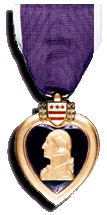 What is the Purple Heart? The Purple Heart is an American military medal and is the world's oldest military decoration still in use. It was the first American medal to be awarded to the common soldier. Initially it was named the Badge of Military Merit and was created by one of the world’s most famed and best-loved heroes— General George Washington.
The PURPLE HEART is a combat decoration awarded to members of the armed forces of the United States who are wounded by an instrument of war in the hands of the enemy. When the wounds are mortal, the PURPLE HEART is posthumously given to the fallen soldier's next of kin in his name.
The Military Order of the Purple Heart
John S. McCain III (Veterans History Project), was a recipient of The Purple Heart. The Purple Heart medal on the chest of a young soldier reminds us that ...
FREEDOM IS NOT FREE
I watched the flag pass by one day.
It fluttered in the breeze
A young soldier saluted it, and then
He stood at ease.
I looked at him in uniform
So young, so tall, so proud
With hair cut square and eyes alert
He'd stand out in any crowd.
I thought how many men like him
Had fallen through the years.
How many died on foreign soil?
How many mothers' tears?
How many Pilots' planes shot down?
How many foxholes were soldiers' graves?
No Freedom is not free
I heard the sound of taps one night,
When everything was still.
I listened to the bugler play
And felt a sudden chill.
I wondered just how many times
That taps had meant "Amen"
When a flag had draped a coffin
of a brother or a friend.
I thought of all the children,
Of the mothers and the wives,
Of fathers, sons and husbands
With interrupted lives.
I thought about a graveyard
At the bottom of the sea
Of unmarked graves in Arlington.
No Freedom isn't free!
Author--Cadet Major Kelly Strong
I watched the flag pass by one day.
It fluttered in the breeze
A young soldier saluted it, and then
He stood at ease.
I looked at him in uniform
So young, so tall, so proud
With hair cut square and eyes alert
He'd stand out in any crowd.
I thought how many men like him
Had fallen through the years.
How many died on foreign soil?
How many mothers' tears?
How many Pilots' planes shot down?
How many foxholes were soldiers' graves?
No Freedom is not free
I heard the sound of taps one night,
When everything was still.
I listened to the bugler play
And felt a sudden chill.
I wondered just how many times
That taps had meant "Amen"
When a flag had draped a coffin
of a brother or a friend.
I thought of all the children,
Of the mothers and the wives,
Of fathers, sons and husbands
With interrupted lives.
I thought about a graveyard
At the bottom of the sea
Of unmarked graves in Arlington.
No Freedom isn't free!
Author--Cadet Major Kelly Strong
Linked at Mudville Gazette's 'Open Post' and 'Beltway Traffic Jam' at Outside the Beltway.
Thursday, July 21, 2005
First Battle of Manassas
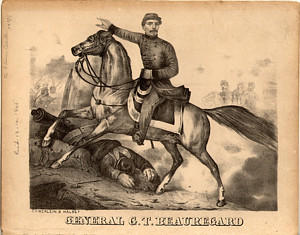
The first major battle of the Civil War was fought, 21 July 1861, near the Manassas, Virginia railway junction, and became known as the First Battle of Manassas by the Confederates and the First Battle of Bull Run, by the Union. The armies in this first battle were not very large by later Civil War standards. The Federal forces of about 30,000 troops were commanded by Brigadier General Irvin McDowell. The Confederates had two armies, the Confederate Army of the Potomac under command of Brigadier General Pierre G. T. Beauregard, and the Army of the Shenandoah, commanded by Brigadier General Joseph E. Johnston.
When General Beauregare ordered his fresh troops to attack the right flank of the advancing Union army, the Yankees heard for probably the first time a sound that would bring instant chills throughout the remainder of the war. The 6,500 attacking Confederates let loose with a shrill, yelping fox hunter's call, which became known as the "Rebel Yell." It terrified the Yankee soldiers into a disorganized rout.
The heroes of the day were a brigade of Virginia soldiers commanded by Brig. Gen. Thomas J. Jackson who refused to lose any ground. Because of their heroic obstinancy, Confederate Brig. Gen. Barnard Bee famously shouted the order: "Look! There is Jackson standing like a stone wall! Rally behind the Virginians!" The Confederates did and the battle resulted in a humiliating rout of Union forces and a disorderly retreat, bringing the battle to a halt. General Jackson became known as "Stonewall Jackson" and the brigade as the "Stonewall Brigade".
General Beauregard won the day by attacking the Federals and causing their disorganized retreat. The elite of Washington, D.C. had treated the war as a spectator sport and rode out to the battlefield to picnic. When the Union Army was driven back, the roads back to Washington were blocked by terrified civilians and their carriages. If the Confederates had chased the Yankees back to Washington, they could probably have won the war. However, they were too tired and inexperienced to conduct an effective pursuit, so the battle ended.
The Federals lost about 3,000 casualties (killed, wounded, and captured or missing), and the Confederates suffered about 2,000. These horrific casualty numbers for one day's battle stunned the nation. The Stone House, which served as an aid station, still stands today as it has since the 1840s, overlooking the Warrenton Turnpike.
Linked at Llama Butchers where there is more discussion.
Wednesday, July 20, 2005
Doubting Atheists
It is the worst of times for atheists. They have always been a small minority, but today God has become so popular, that they dare not express themselves. Some are even doubting their own beliefs. Read about it here: A Time of Doubt for Atheists. To me it just proves that humankind needs something to latch onto; something to believe. Believing that God does not exist is a form of religion, as the credo of atheism must be accepted on faith, as it cannot be proven that there is no Creator. Agnosticism seems to be a different philosophy, as it makes no claims one way or the other.
Sunday, July 17, 2005
The Neanderthal Theory
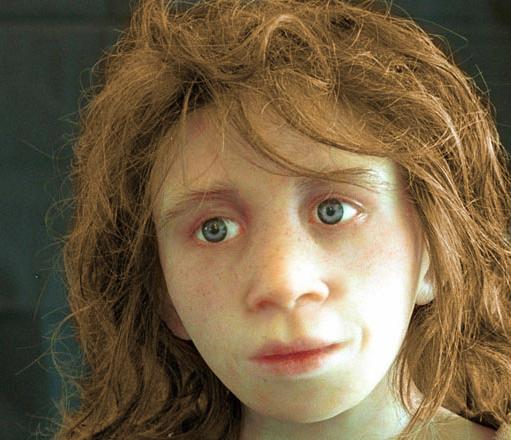 Who would have ever known that Neanderthals were freckle-faced redheads? Does that mean the Vikings were descended from them? You know, Eric the Red, Leif, Bjarne and the gang of conquering Norse explorers?
The image is a modified reconstruction of Gibraltar Neanderthal child, from the web site: "The Neanderthal Theory of Autism, Asperger and ADHD".
Scientific Thoughts writes that Neanderthal was a species of the genus Homo (Homo Neanderthalensis) that inhabited Europe and parts of western Asia about 230,000 to 29,000 years ago. Their bodies were designed for cold, short and robust with large noses. Scientists are now isolating genetic fragments from fossils to map their DNA.
"How cool will it be, if we could reconstruct an extinct animal from the fragments of its fossilized genome? Such a project is currently being unveiled at the Max-Planck Institute for Evolutionary Anthropology, where U.S. and German scientists have launched a project to recreate the Neanderthal genome."
Saturday, July 16, 2005

Tuesday, July 12, 2005
Defeat Terrorism -


"Have not I commanded thee? Be strong and of a good courage; Be not afraid, neither be thou dismayed: For the LORD thy God is with thee whithersoever thou goest." ~~Joshua 1:9
"Be not afraid. I go before you always. Come follow me, and I will give you rest." ~~prayer hymn
"But he saith unto them, It is I; be not afraid." ~~John 6:20
"lift up thy voice with strength; lift it up, be not afraid;" ~~Isaiah 40:9
Cat Lovers Gone Wild

In staid and colonial Mount Vernon, Virginia, just a mile from the home of George and Martha Washington, animal control officers removed 273 feline creatures -- 86 of them dead -- after neighbors complained vehemently of odors last Friday. As of the following Monday, cats were still being found in the house, hidden in the walls and in the brick fireplace chimney. "I don't know how they got in there," said a Fairfax County police officer. Curbside, the home appears as charming and well cared for as others in the neighborhood, but it smells much different. Think feline feces, feline urine and the decomposing corpses of dead cats. Authorities posted an orange condemnation order on the home and ordered the the cat lovers, 82-old Mrs. Kneuven, her husband and daughter to leave. However, after the police left, the elderly woman returned to her home and ripped down the condemnation order. Animal-control officers were alerted and found her trying to smuggle out an additional 30 cats, bringing the total by Monday night to 303 confiscated animals. Traps were set for any remaining beasts, therefore the number is expected to rise.
Strong Odors Expose Northern Virginia House's Secret: The neighborhood of Mrs. Knueven is an enclave of stately homes that back up to George Washington's Mount Vernon plantation. Neighbors say that the woman was obsessed with cats. She spent years taking in strays, which then multiplied inside her home and caused years of headaches for them. They say she tried to mask the odor by burning incense in her back yard. The attempts were unsucessful, but fortunately she did not cause any house fires.
Few have any emotion except disgust for the cat lovers gone wild. However there is more to the story. In 2001, Fairfax County authorities secretly removed more than 100 cats from the Knueven household, and allowed Mrs. Kneuven to keep five cats as pets. Fairfax County Animal Countrol obviously neglected to require neutering of the animals, as now, four years later they have multiplied to over 300. And there is no other way, short of the unmentionable, to separate a cat from his home, as the old folk song reminds us:
Old Mrs. Kneuven had troubles of her own.
Had lots of cats that wouldn't leave her alone.
She tried and tried to give them all away,
She gave them to a man going far, far away.
But the cats came back, the very next day.
But the cats came back, She thought they were goners,
But the cats came back, they just couldn't stay away, away, away.
Had lots of cats that wouldn't leave her alone.
She tried and tried to give them all away,
She gave them to a man going far, far away.
But the cats came back, the very next day.
But the cats came back, She thought they were goners,
But the cats came back, they just couldn't stay away, away, away.
Linked at basil's blog Breakfast: 7/13/2005, Eschaton and Wizbang's and Carnival of the Trackbacks XX..
Monday, July 11, 2005
Sailing on Noah's Ark
Those who are collectors of the inanimate will delight in this poem and understand a bit more than "just because," the reason they clutter their lives, indulging themselves with such a puzzling human instinct. Here is a beautiful poem by Texas poet Janet McCann, "The Woman Who Collects Noah's Arks", from a work entitled Emily's Dress. It is a PDF file.
"The Woman Who Collects Noah’s ArksHat Tip to Ginny at ChicagoBoyz.
Has them in every room of her house,
wall hangings, statues, paintings, quilts and blankets,
ark lampshades, mobiles, Christmas tree ornaments,
t-shirts, sweaters, necklaces, books,
comics, a creamer, a sugar bowl, candles, napkins,
tea-towels and tea-tray, nightgown, pillow, lamp.
Animals two-by-two in plaster, wood,
fabric, oil paint, copper, glass, plastic, paper,
tinfoil, leather, mother-of-pearl, styrofoam,
clay, steel, rubber, wax, soap.
Why I cannot ask, though I would like
to know, the answer has to be simply
because. Because at night when she lies
with her husband in bed, the house rocks out
into the bay, the one that cuts in here to the flatlands
at the center of Texas. Because the whole wood structure
drifts off, out under the stars, beyond the last
lights, the two of them pitching and rolling
as it all heads seaward. Because they hear
trumpets and bellows from the farther rooms.
Because the sky blackens, but morning finds them always
safe on the raindrenched land,
bird on the windowsill."
Saturday, July 09, 2005
Wounded Warriors
Staff Sergeant Heath T. Calhoun
On the evening of July 8, 2005, at Constitution Hall in Washington, Staff Sergeant Heath Calhoun was the recipient of the National Society Daughters of the American Revolution (DAR) Medal of Honor. He also received the DAR's Outstanding Veteran Patient Award. This was the first time in DAR history that the same person had received both awards.
Staff Sergeant Heath T. Calhoun, dreamed of being a soldier all of his life while growing up in southwest Virginia. He wanted to follow in the footsteps of his father, a Vietnam veteran, and his grandfather who served as a soldier in World War II. At the age of 23, he was deployed to Iraq as a member of the 101st Airborne Division as an Army Ranger. Soon after arriving in theater, a rocket-propelled grenade hit his Humvee as he was transporting troops to Mosul in 2003. His life was saved by his fellow soldiers, but both legs had to be amputated above the knee. Sergeant Calhoun was evacuated to the Walter Reed Army Hospital where he found a backpack strapped to his carrier that contained clothes, toiletries, and other items he might need his first few days in the hospital. It was a gift from the Wounded Warrier Project.
With courage and determination, Sergeant Calhoun (image) managed to quickly adapt to prosthetics. At the same time, he began reaching out to veteran-patients and returning soldiers offering encouragement and companionship. He has supported and worked with many programs that raise awareness of the plight of the returning wounded and that provide counseling for soldiers. This courageous veteran, a husband and father of two, has now become one of the national spokesmen for the Wounded Warrior Project.
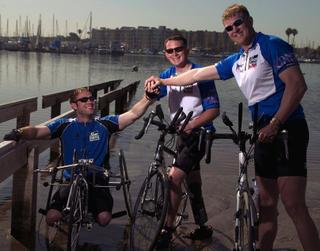
This summer he is participating in Soldier Ride, a bike ride across the United States to raise awareness and funds for the Project. He is one soldier who has turned real adversity into something that supports and gives strength to others. He claims not to be a hero, but is instead someone who never quits. “I want people to just know that I never quit” he said to the assembled members of the DAR. However, the people in Sergeant Calhoun’s community consider him a hero.
Meet the riders of the Soldier Ride 2005 National Tour Team
Linked at 'Carnival of the Trackbacks IXX' from Wizbang and at 'Open Post' from Mudville Gazette.
On the evening of July 8, 2005, at Constitution Hall in Washington, Staff Sergeant Heath Calhoun was the recipient of the National Society Daughters of the American Revolution (DAR) Medal of Honor. He also received the DAR's Outstanding Veteran Patient Award. This was the first time in DAR history that the same person had received both awards.
Staff Sergeant Heath T. Calhoun, dreamed of being a soldier all of his life while growing up in southwest Virginia. He wanted to follow in the footsteps of his father, a Vietnam veteran, and his grandfather who served as a soldier in World War II. At the age of 23, he was deployed to Iraq as a member of the 101st Airborne Division as an Army Ranger. Soon after arriving in theater, a rocket-propelled grenade hit his Humvee as he was transporting troops to Mosul in 2003. His life was saved by his fellow soldiers, but both legs had to be amputated above the knee. Sergeant Calhoun was evacuated to the Walter Reed Army Hospital where he found a backpack strapped to his carrier that contained clothes, toiletries, and other items he might need his first few days in the hospital. It was a gift from the Wounded Warrier Project.
With courage and determination, Sergeant Calhoun (image) managed to quickly adapt to prosthetics. At the same time, he began reaching out to veteran-patients and returning soldiers offering encouragement and companionship. He has supported and worked with many programs that raise awareness of the plight of the returning wounded and that provide counseling for soldiers. This courageous veteran, a husband and father of two, has now become one of the national spokesmen for the Wounded Warrior Project.
This summer he is participating in Soldier Ride, a bike ride across the United States to raise awareness and funds for the Project. He is one soldier who has turned real adversity into something that supports and gives strength to others. He claims not to be a hero, but is instead someone who never quits. “I want people to just know that I never quit” he said to the assembled members of the DAR. However, the people in Sergeant Calhoun’s community consider him a hero.
Meet the riders of the Soldier Ride 2005 National Tour Team
Linked at 'Carnival of the Trackbacks IXX' from Wizbang and at 'Open Post' from Mudville Gazette.
Friday, July 08, 2005
Rally 'Round the Flag

The Colonial Flag is the The Flag of Great Britain, which flew over the 13 American Colonies that were to become the first 13 United States, from 1707 to 1775.

On January 1, 1776, General George Washington's troops raised their new flag on the liberty pole at Prospect Hill in Cambridge, Massachusetts. General Washington called it the "The Grand Union Flag". This was the official flag of the 13 American Colonies on July 4, 1776 when the colonies declared their independence from England. For almost the entire first year of the American Revolution, the Grand Union Flag was the ensign of the struggling new "United States".

Old Glory, the stripes remain forever thirteen, yet the field of stars can change, representing the states in the Union.
Rally Round the Flag, Inspirational music as you roam the Angloshere (midi file).
Rally Round the Flag, The Words of the song.
This Land is Your Land
The Red, White and Blue

 Red, White and Blue, these colors never run. Those who march under these colors, know not the meaning of the word "terror". If you have not already, you may want to fly the beloved British Union Jack on your blog today. Better yet, fly it forever, as Britain stands in the line of fire to save freedom. Standing with England is her cousin, America ..
A dust whom England bore, shaped, made aware,
"Gave, once, her flowers to love, her ways to roam;
A body of England's, breathing English air,
Washed by the rivers, blest by suns of home.
And think, this heart, all evil shed away,
A pulse in the eternal mind, no less
Gives somewhere back the thoughts by England given;
Her sights and sounds; dreams happy as her day;
And laughter, learnt of friends; and gentleness,
In hearts at peace, under an English heaven."
From "The Soldier" by Rupert Brooke.
"Gave, once, her flowers to love, her ways to roam;
A body of England's, breathing English air,
Washed by the rivers, blest by suns of home.
And think, this heart, all evil shed away,
A pulse in the eternal mind, no less
Gives somewhere back the thoughts by England given;
Her sights and sounds; dreams happy as her day;
And laughter, learnt of friends; and gentleness,
In hearts at peace, under an English heaven."
From "The Soldier" by Rupert Brooke.
Thursday, July 07, 2005
Be Grateful for London
 Be grateful that somewhere in this immense world there is a place called London. Be grateful for a race of people who cannot be terrorized. Thank God there is still an England to be a beacon to the free world, to lead the way out of the frightful caverns of death and destruction which is the handiwork of the acolytes of the Evil One. God Save the Queen. God Save Us All, we children of Albion.
Thanks to 'Carnival of the Trackbacks IXX' from Wizbang and to basil's blog Brunch: 7/9/2005 for trackback opportunities. Linked at 'People's Song' from Chicago Boyz.
Vladimir Waiting
"Let us not waste our time in idle discourse! Let us do something, while we have the chance! It is not every day that we are needed. Not indeed that we personally are needed. Others would meet the case equally well, if not better. To all mankind they were addressed, those cries for help still ringing in our ears! But at this place, at this moment of time, all mankind is us, whether we like it or not. Let us make the most of it, before it is too late! Let us represent worthily for once the foul brood to which a cruel fate consigned us! What do you say? It is true that when with folded arms we weigh the pros and cons we are no less a credit to our species. The tiger bounds to the help of his congeners without the least reflection, or else he slinks away into the depths of the thickets. But that is not the question. What are we doing here, that is the question. And we are blessed in this, that we happen to know the answer. Yes, in this immense confusion one thing alone is clear. We are waiting for Godot to come—"
~~Vladimir, in Samuel Beckett's "Waiting for Godot"
[samuel beckett] [Waiting for Godot] [Godot] [vladimir]
~~Vladimir, in Samuel Beckett's "Waiting for Godot"
[samuel beckett] [Waiting for Godot] [Godot] [vladimir]
Wednesday, July 06, 2005
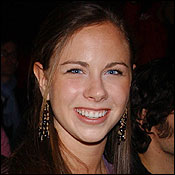
Bush Twin in Capetown
Who knew? I guess that's why they call it "anonymity". I agree with Wizbang (Sometimes Breeding Shows) about the Bush family. They are America's role model.
[barbara bush] [africa] [capetown] [south africa]
Bush daughter is said to volunteer in S. Africa - The Boston Globe:
"CAPE TOWN -- At the Red Cross War Memorial Children's Hospital, children sit on their mothers' laps in waiting rooms, waddle down hallways, and wail inside the burn unit, where nurses carefully wrap gauze around their arms, legs, and heads. It is here, say some doctors and nurses, that Barbara Bush, one of President Bush's twin daughters, has been working in near anonymity as a volunteer."


Tuesday, July 05, 2005
Last Victorian Nation
Is that us? The United States of America? Who knew? I am excited to read about it. My father was raised by Victorian parents. Gates of Vienna has the story that America is "The World's Last Great Victorian Nation”, from The Scotsman on the 4th of July.[victorian]
"The Scotsman ran a 4th of July editorial that deserves wide distribution in this country. Its author, Alex Massie, is to be commended on understanding and conveying so well what America means at this moment.
"We are not unique. As he says, we follow in the Victorians’ footsteps, accepting the politically incorrect, the very politically incorrect mantle that Kipling called the 'White Man’s burden.' He would have been more accurate to term it “the burden of democracy” for that is what it is and what it was when Kipling first named it.
"We follow in Britain’s footsteps, though we do not wear her Imperial shoes. Wherever Her Majesty’s people went they left a legacy of property rights and the rule of law. Was it a bloody road to liberty? Indeed. The Victorians were sure they were right and they sought to impose their vision."
Footprints of Early Americans
History is once again being rocked upon its "firm" foundations. Apparently the first Americans did not arrive here on foot from Siberia only 11,000 years ago. New footprints of the ancients have been discovered in volcanic ash.
BBC NEWS | Science/Nature | Footprints of 'first Americans': "Human settlers made it to the Americas 30,000 years earlier than previously thought, according to new evidence.A team of scientists came to this controversial conclusion by dating human footprints preserved by volcanic ash in an abandoned quarry in Mexico. They say the first Americans may have arrived by sea, rather than by foot."Where did these ancient people come from? DNA studies of present-day native populations support a more recent arrival from north-east Asia, which agrees with the land bridge from Asia to Alaska theory. Just another mystery of the universe. The more we learn, the more we do not know.
Monday, July 04, 2005
July 4th, 1863
For about the past week, Rick Moran of Right Wing Nuthouse has been in a time warp. With his laptop, he has been blogging the historic countdown to July 4th of 1863. He has entitled it "Countdown to Gettysburg".
This (July 3, 1863) is the seventh and final effort in my series of week-long blog posts called “Countdown to Gettysburg”. They are written from the perspective of someone who lived at that time and as if the internet existed in 1863. Below are links to previous posts:
June 27, 1863, June 28, 1863, June 29,1863, June 30, 1863, July 1, 1863, and July 2, 1863,
Overture 1776
BACKGROUND MUSIC ~ Here is a great piece of modern music (18mb MP3), written for the United States Military Academy, by composer Thomas C. Duffy of Yale University. Listen to Overture 1776 (minimize your media player). Overture 1776 was composed in honor of West Point's bicentennial and was premiered there on 25 August 2002. The composer created a work of American music to replace Tchaikovsky's Overture of 1812, as he believed it time that a great nation had its own music to celebrate American Independence, rather than music depicting the Russians versus the French. Using the Overture of 1812 as his model, he created a piece depicting the struggle between the British and the American colonials, including fireworks and cannons. The old tune God Save the King, now known to Americans as My Country ‘Tis of Thee, is countered by Chester, the anthem of the American Revolution, and the country's unofficial national anthem until 1931. He includes other contemporary tunes such as Yankee Doodle, The White Cockcaid (played by the Acton, Massachusetts Militia as they marched to the Concord Bridge on April 19, 1775), and the World Turned Upside Down (played by the British as they surrendered to George Washington). This is true American music, celebrating and honoring the music of the Revolutionary period and of those patriots who secured our liberties and who built our country so long ago.
The Unanimous Declaration
IN CONGRESS, JULY 4, 1776
THE UNANIMOUS DECLARATION
of the
THIRTEEN UNITED STATES OF AMERICA

Happy Birthday America
Sunday, July 03, 2005
73 Year Old Grandma Sent to Iraq
From The Washington Post.
"About the time you're celebrating the Fourth of July, Lena Haddix will be en route to Iraq. She's a 73-year-old great-grandmother who recently finished a six-month deployment to Kuwait and then signed up for a six-month deployment to Baghdad.
"Haddix is the mother of five children, ranging in age from 41 to 52. She has eight grandchildren and three great-grandchildren. She took a 10-day vacation before starting her hitch in Iraq so that she could be home for a grandson's 21st birthday.
"... she will be flying to Kuwait on the Fourth and arriving in Baghdad on July 5 for her assignment at Camp Liberty, which was damaged during a recent mortar attack."
Haddix is a 30-Year PX Veteran Braving Baghdad 'for Our Troops'. She is a manager for the Army Air Force Exchange Service and she volunteered to work in a war zone because "I'm doing it for our troops." God Bless America!
What can we do as our part to support our troops? America Supports You
Hat Tip to Mudville Gazette.
229 Years Free Because ...
 This bronze statue was commissioned in Iraq by the soldiers of the 4th Infantry division. It was made from the statues of Saddam that were blown up. It was placed inside of one of his palaces, but today it resides at a museum in Fort Hood,Texas, the home of the 4th Infantry.
And here is the rest of the story ....
Memorial to Fallen Task Force Ironhorse Troops
http://www.snopes.com/photos/military/kalat.asp~*~ Music ~*~
Trackedback at Wizbang's Carnival of the Trackbacks.
Subscribe to:
Posts (Atom)